| The scenery along the lower Danube is mostly flat and uninspiring, but the gorges known as the Iron Gates are much different. This 80 mile stretch of the Danube offers up some of the best scenery along the entire river. In the early 1960s a joint Yugoslavian/Romanian project built a dam that created a lake over 30 meters deeper than the original river. Ten years later (several miles downriver), a joint Romanian/Serbian project built a giant hydroelectric power plant to supply electricity to both Romania and Serbia. We spent the day relaxing and enjoying the scenery, and finished off with a special dinner in the ship's private dining room |
| Iron Gates |


A Serbian national park attracts tourists to a cave in the rock
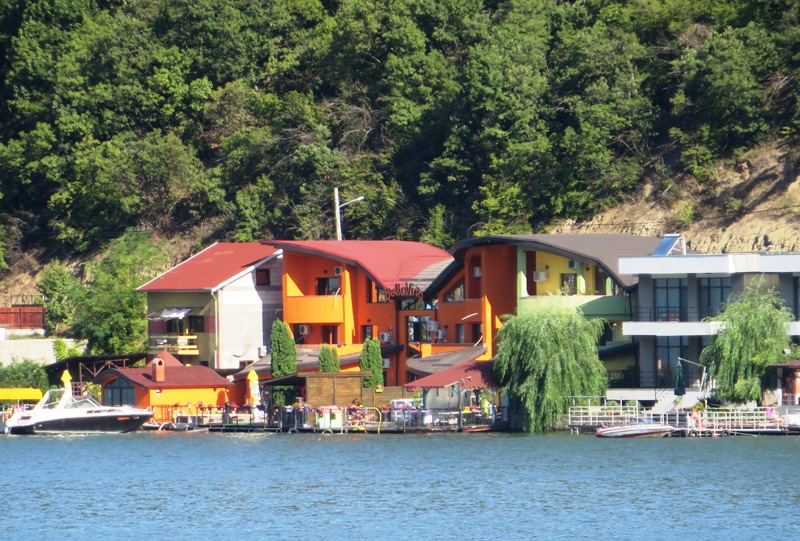
| The Iron Gates section of the Danube was the only place where we saw villages along the river and tourist/recreational activity. Click below to see some of the modern homes. |


| Towards the end of the Iron gates "lake", the Danube becomes the border between Serbia and Romania |
| Decebalus, a Dacian prince (87-107) was the nemesis of the Romans. This 40 meter high sculpture was completed in 2004 by a team of 12 sculptors. It is the tallest rock sculpture in Europe. |

One of the few places where the Danube actually looks blue
| Passing through the Hydroelectric Dam locks |
