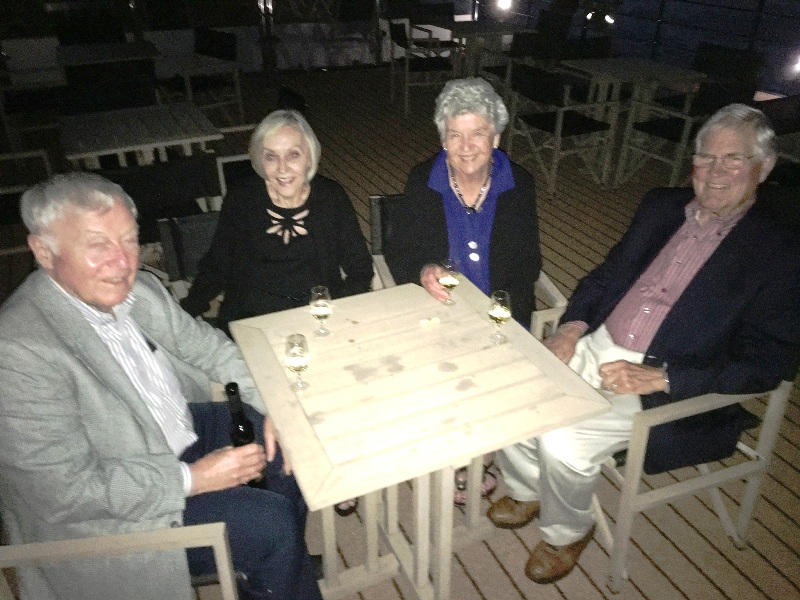
| Vukovar is in the Eastern part of Croatia; it is vastly different from Western Croatia bordering the Adriatic Sea and home of Dubrovnik, which is one of the most beautiful historic cities in the world. (We stayed nearby at Svetti Stephan in the 80s.) Vukovar's population was about 1/2 Serbian, which led to the virtually total destruction of the city when the Croats and Serbs fought over how to breakup Yugoslavia in 1991. We skipped the city tour and instead went on a wine tasting about an hour away in the town of Ilok. Thereafter, we boarded the boat and sailed to our first stop in Serbia: Novi Sad. |
| Vukovar, Croatia And Novi Sad, Serbia |


| The outskirts of Vukovar are quickly taken over by vast vineyards; this is one of Croatia's largest grape growing regions. The Principov wine estate is surprisingly modern-looking hilltop destination resort. The surrounding views are almost unlimited. |
| View of the town of Ilok a couple of miles distant |
| Our best quality tasting experience was in the wine caves of Ilok, where the Principovac wines are stored . The grapes are local varieties, which produce both red and white wines. The caves are filled with bottles that have been stored for 50 years or more, including whites (they have to be recorked every 15 years). A White desert wine, which is one of their specialties, called a "Coronation" wine was served at Queen Elizabeth's coronation in 1947. I bought the current 2016 vintage for later consumption on our boat (click on thumbnail). It was outstanding! |


| Past Ilok the Danube flows for 125 miles solely within Serbia. Serbia emerged from the breakup of Yugoslavia in 1991 ,and subsequently the war with Kosovo in 1998, to become an independent state in 2006. Novi Sad is Serbia's second largest city with a population of 250,000. The city center retains very few buildings predating the 19th century because it was decimated in the 1848 Hungarian invasion and further damaged by NATO bombing during the 1999 Kosovo war. Novi Sad looks like a fairly modern city now, at least around the city square. Evidence of modernization is seen in the sign at left, which includes both english and cyrillic names. |


| One of 3 bridges rebuilt after the NATO bombing |


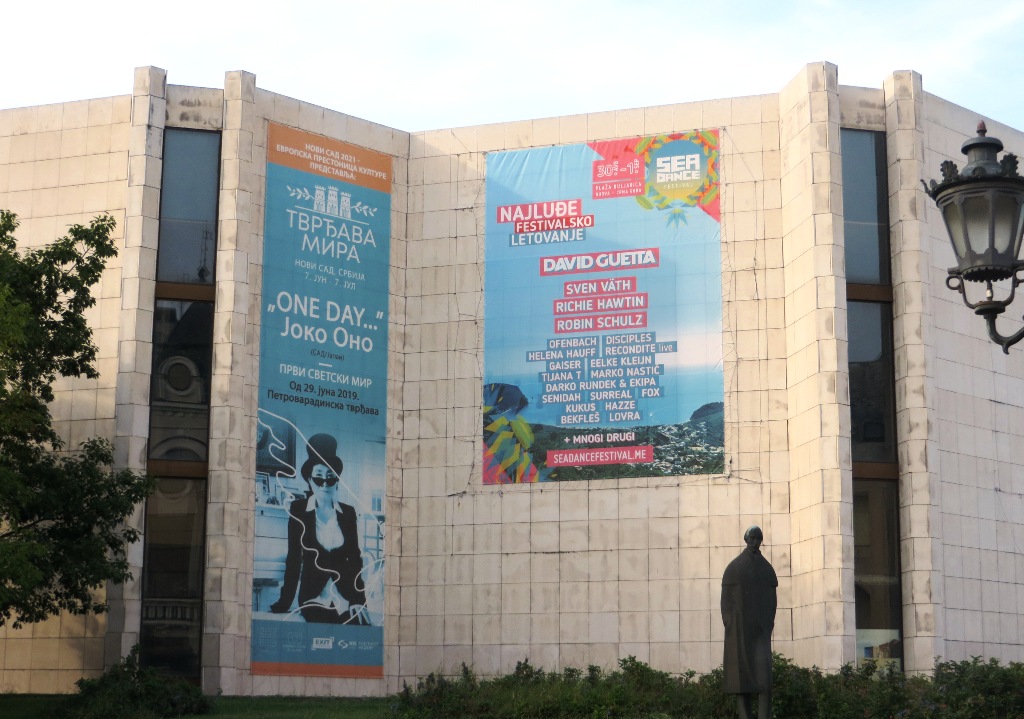
| The modern concert hall. Click on thumbnail to see program announcement |
The city square


| Below is an apartment block built during the Communist era. It is typical of the drab and now run-down architecture seen throughout the Eastern European countries. I didn't take this picture; it was taken in Sofia and found on Google. |
| Across the river: The fortress of Petrovaradin, which dates back to the 13th century |